Cultural Policy in Melbourne
Supporting diverse creative expression, drawing from the world’s oldest continuously living culture

Cultural policy
Melbourne’s cultural strategy is developed by the City of Melbourne, which is responsible for the city’s central business district area (CBD) and surrounds, whilst the Victorian state government, also provides arts funding and directs state-wide cultural strategy. The city’s Creative Strategy 2018-28 sets out cultural policy for the city, guided by an implementation plan.
Substantial investments are currently directed towards the arts precinct, with the aim of ensuring that the public spaces surrounding these iconic institutions are just as inclusive and inspiring as the experiences within them. This includes the initiation of original public art commissions, the establishment of a new national contemporary art gallery, and a comprehensive redesign of the precinct’s public areas. These endeavours are poised to further enhance Melbourne’s renowned cultural reputation and contribute to its artistic vitality.
Melbourne’s festival and events scene, from YIRRAMBOI – Australia’s premier First Nations arts festival – to the Grand Prix, the Melbourne International Comedy Festival, RISING Festival, and the Melbourne Food and Wine Festival, are big draws to the city. The city is investing AUD $21.5 million in major events, building confidence in both the sector and audiences, who remain passionate about arts and culture. Yirramboi means ‘tomorrow’ in the shared local languages of the Boonwurrung and Woiwurrung peoples.
Cultural programmes
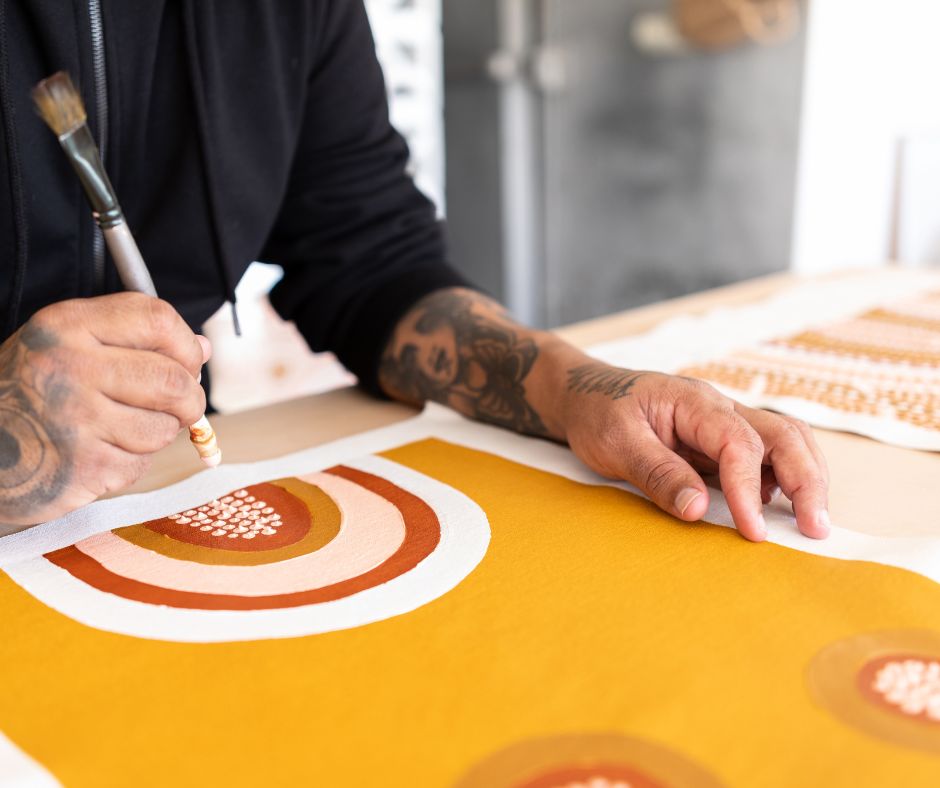
At the local level, Melbourne is making bold investments aimed at revitalising its economy and positioning itself as a city of possibilities. The city is actively fostering increased visitation and the concentration of people, productivity, skills, and talents that drive economic growth. One noteworthy initiative involves employing over 80 artists to transform the city’s laneways and shopfronts into vibrant cultural spaces. Additionally, Melbourne has a continued commitment for grant funding to artists demonstrating a commitment to showcasing its rich creative culture, with a particular emphasis on supporting arts projects by Aboriginal artists.
Post-pandemic, the city is working to reassess new patterns of footfall and visitor behaviour and respond to these changes with cultural programming.
Cultural heritage and infrastructure
The Yarra River, known as Birrarung in the local language, has always held profound significance as a meeting place for the people of the Eastern Kulin Nation, who are the traditional custodians of Melbourne.
Flowing from the suburbs to the heart of the central city, the Yarra River serves as a gateway to Melbourne’s vibrant arts precinct. This area is home to an array of cultural institutions, including the National Gallery of Victoria, Melbourne Theatre Company, Australian Centre for Contemporary Arts, Melbourne Recital Centre, and the University of Melbourne Faculty of Fine Arts and Music, among others. The City of Melbourne manages local libraries, museums and a range of arts facilities including Arts House.
Consistently recognised as one of the world’s most liveable cities, Melbourne’s greatest strength lies in its diversity. Its population hails from over 200 countries, speaking a staggering 260 languages and practicing 135 faiths. Remarkably, 34% of the city’s residents were born outside of Australia. This rich tapestry of experiences and perspectives contributes to a vibrant creative scene, featuring nearly 400 festivals and celebrations, along with more than 550 live music venues.
Community engagement, social impact and policy innovation
The cost of living in Melbourne, as in Australia as a whole, continues to rise, putting significant financial stress on many renters. In response, numerous long-term city dwellers have seized the opportunity to embrace remote-working arrangements, relocating from metropolitan Melbourne to the state’s burgeoning regional areas. As incomes struggle to keep pace with soaring housing costs, there is an evident and growing need for nationwide investment in social housing.
© Images Courtesy of Getty/Canva